Ever wondered what it feels like to raise that gleaming Wimbledon trophy while 15,000 fans roar your name? For a select few tennis legends, that dream became reality on Centre Court’s hallowed grass.
From Federer’s record-breaking eight Wimbledon wins to Serena’s dominant seven titles, the Championships have defined careers and cemented legacies for over a century.
Tennis fans obsess over Wimbledon winners because these champions conquered not just opponents, but the unique pressure of tennis’s most prestigious tournament – where tradition meets modern athleticism on slick grass courts that punish the slightest mistake.
But here’s what most people miss about these champions: the secret patterns in their victories that separate the one-time winners from the true Wimbledon icons.
The Rich History of Wimbledon Championships

A. Origins and Evolution of the World’s Oldest Tennis Tournament
Wimbledon wasn’t always the global spectacle we know today. Back in 1877, it started as a simple fundraiser for the All England Croquet Club (yes, croquet came first!). They needed to repair their lawn roller, so they hosted a little tennis tournament that attracted just 22 players competing for a 12-guinea prize.
Only men played that first year—women had to wait until 1884 to get their shot. And those early matches? Nothing like today’s power serves and baseline rallies. Players wore long trousers and button-up shirts, used wooden rackets, and played with uncovered balls that went soft when wet.
The tournament survived two World Wars (though they canceled play during both), and when tennis went professional in 1968, Wimbledon stepped into the “Open Era” that transformed it from genteel amateur competition to the commercial powerhouse it is today.
B. The All England Lawn Tennis Club: Home of Traditions
The AELTC isn’t just a tennis club—it’s the keeper of Wimbledon’s soul.
Where else would players still bow to royalty in the Royal Box? Or adhere to a strict all-white dress code that’s been enforced since the Victorian era?
The traditions are what make Wimbledon, Wimbledon:
- Strawberries and cream (they sell around 27,000 kilos during the tournament)
- The queue where fans camp overnight for tickets
- Ball boys and girls selected from local schools
- The absence of sponsor advertising around the courts
The club’s members-only policy remains notoriously exclusive. Even some champions never receive membership invitations, while British royalty and tennis royalty mingle in its hallowed halls.
C. How Wimbledon Became the Most Prestigious Grand Slam
What makes Wimbledon the crown jewel of tennis when there are three other Grand Slams?
It’s partly age—Wimbledon had a 4-year head start on the US Open, 14 years on the French, and 28 years on the Australian. But it’s more than just being first.
Wimbledon maintained its status by resisting change that might compromise its identity. When other tournaments switched to colored courts, Wimbledon kept its pristine green grass. When others plastered ads everywhere, Wimbledon kept its courts clean.
The Royal connection adds undeniable prestige too. From King George V to Catherine, Princess of Wales, royal patronage elevates Wimbledon beyond mere sport to cultural institution.
Players themselves reinforce its status. As Federer once said, “Wimbledon feels like playing in a cathedral of tennis.”
D. Notable Rule Changes and Modernization Through the Years
For all its traditions, Wimbledon has adapted when necessary:
The tiebreak revolution came in 1971, ending those marathon sets—well, except for the final set, where play continued until someone won by two games. (They finally added a tiebreak at 12-12 in 2019 after John Isner and Nicolas Mahut’s infamous 70-68 fifth set in 2010.)
Technology transformed Wimbledon too. Hawk-Eye electronic line calling arrived in 2007, and in 2009, they built a retractable roof over Centre Court so rain couldn’t stop play.
Prize money took until 2007 to reach equality, making Wimbledon the last Grand Slam to offer equal pay to men and women.
The tournament’s latest modernization challenge? Climate change. With grass court specialists becoming rarer and baseline play dominating, groundskeepers continually adapt their techniques to maintain courts that can withstand modern power tennis while preserving the unique character of grass court play.
Legendary Men’s Singles Champions

A. Record-Breaking Titleholders (Federer, Djokovic, Sampras)
When it comes to Wimbledon legends, three names tower above the rest. Roger Federer, the Swiss maestro, has captured a stunning 8 men’s singles titles—the most in history. His effortless movement on grass made Centre Court feel like his personal playground from 2003-2007 when he won five straight.
Novak Djokovic isn’t far behind with 7 titles. The Serbian machine has dominated the modern era, claiming victories in 2011, 2014, 2015, 2018, 2019, 2021, and 2022. His return game and mental toughness have been unmatched.
Pete Sampras, the American serving sensation, grabbed 7 championships between 1993-2000. His serve-and-volley style was perfectly suited for the slick grass courts.
B. The Golden Era of Borg, McEnroe, and Connors
The late 70s and early 80s gave us tennis drama like no other. Bjorn Borg, the “Ice Man,” won five consecutive titles (1976-1980) with his baseline consistency and mental fortitude that seemed supernatural.
John McEnroe, his perfect foil, brought fiery passion and the most delicate touch at net. His 1981 victory over Borg ended the Swede’s reign in a match for the ages.
Jimmy Connors, with his two-handed backhand and fighting spirit, claimed championships in 1974 and 1982—eight years apart, showing remarkable longevity. His flat groundstrokes and aggressive returns revolutionized how the game was played on grass.
C. British Champions: From Fred Perry to Andy Murray
For 77 long years, British fans waited for a homegrown champion after Fred Perry’s 1936 victory. Perry, the working-class hero, captured three consecutive titles (1934-1936) before turning professional.
The drought finally ended in 2013 when Andy Murray defeated Novak Djokovic in straight sets. The moment Murray clinched championship point unleashed decades of pent-up emotion on Centre Court. Murray would add another title in 2016, cementing his place among British sporting legends.
Before Murray, Tim Henman carried British hopes through the 1990s and early 2000s, reaching four semifinals but never making the final.
D. Unexpected Winners and Memorable Upsets
Wimbledon has seen its share of shocking champions. Goran Ivanisevic’s 2001 victory stands as perhaps the most improbable. Entering as a wildcard ranked 125th in the world, the Croatian lefty served his way to glory, defeating Patrick Rafter in a Monday final.
Richard Krajicek stunned everyone in 1996 when he not only won the title but knocked out defending champion Pete Sampras in the quarterfinals—ending Sampras’s 25-match winning streak at Wimbledon.
Michael Stich’s 1991 triumph came out of nowhere, as did Pat Cash’s 1987 victory, complete with his iconic climb into the player’s box to celebrate with his team.
E. Multi-Surface Champions Who Conquered the Grass Courts
The rarest breed of tennis champions can win across all surfaces. Rafael Nadal, primarily known as the “King of Clay,” showed remarkable versatility by claiming Wimbledon titles in 2008 and 2010. His 2008 victory over Federer is widely considered the greatest match ever played.
Andre Agassi completed his career Grand Slam with a 1992 Wimbledon victory, proving his baseline game could adapt to grass. His return of serve and positioning near the baseline changed how players approached the surface.
Rod Laver, the only man to achieve two calendar Grand Slams, won Wimbledon four times across both amateur and professional eras, showcasing incredible adaptability as the sport and its surfaces evolved.
Dominant Women’s Singles Champions

A. The Reign of Martina Navratilova and Steffi Graf
When you talk Wimbledon dominance, two names stand above all others: Martina Navratilova and Steffi Graf.
Navratilova owned the grass courts like nobody else. Nine singles titles. Six consecutive wins from 1982-87. The woman was unstoppable. Her serve-and-volley game was basically designed for Wimbledon’s slick surface.
Grass courts? More like Martina’s living room.
Graf wasn’t too shabby either. Seven Wimbledon trophies to her name, including five in a seven-year span. Her 1988 season? Golden Slam madness – all four majors plus Olympic gold. Her forehand was so devastating they literally called it “Fraulein Forehand.”
B. The Williams Sisters Era: Venus and Serena
The Williams sisters changed everything at Wimbledon.
Venus burst onto the scene first, grabbing five titles between 2000-2008. Her serve was a weapon, her reach ridiculous. Tall, powerful, and graceful – she moved on grass like she invented the surface.
Then there’s Serena. Seven Wimbledon singles titles. The only player, man or woman, to win singles titles in three different decades at the All England Club. Her 2015 “Serena Slam” (holding all four majors simultaneously) included a dominant Wimbledon run.
The sisters faced each other in four Wimbledon finals. Family drama on the biggest stage imaginable.
C. Historic Champions Who Shaped Women’s Tennis
Before the modern era, legends were already being made on Wimbledon’s grass.
Billie Jean King secured six singles titles between 1966-1975, changing the game while fighting for equal pay.
Margaret Court’s three titles came amid her record 24 Grand Slam victories.
Chris Evert, despite clay being her best surface, still managed three Wimbledon titles in the 1970s and 80s.
The incredible Suzanne Lenglen dominated the 1920s with six titles, bringing unprecedented flair and athleticism.
D. First-Time Winners Who Made Their Mark at SW19
Not every Wimbledon story is about dynasty. Some of the most memorable moments came from one-hit wonders.
Maria Sharapova was just 17 when she shocked Serena in the 2004 final.
Marion Bartoli captured hearts with her 2013 win after years of trying.
Petra Kvitová’s first major came at Wimbledon in 2011, showcasing the perfect lefty game for grass.
Simona Halep fulfilled her mother’s dream with her stunning 2019 victory, demolishing Serena in under an hour.
And Virginia Wade’s 1977 triumph remains special – winning on home soil during the Queen’s Silver Jubilee celebrations.
Memorable Wimbledon Finals and Matches

A. Marathon Matches That Defined the Tournament
Wimbledon has seen some matches that just wouldn’t end. Remember the 2010 Isner-Mahut saga? It spanned three days and finished with a mind-boggling 70-68 fifth set. That’s not tennis—that’s survival.
And what about Federer vs. Nadal in 2008? That epic lasted 4 hours and 48 minutes, finishing in near darkness. Rain delays, momentum shifts, and quality tennis that had fans glued to their seats.
The 2019 final between Djokovic and Federer was another beast altogether. First-ever Wimbledon final with a fifth-set tiebreak at 12-12, with Djokovic saving two match points. Brutal.
B. Rivalry Showdowns That Captivated Audiences
The Borg-McEnroe 1980 final? Pure theater. That 18-16 tiebreaker in the fourth set still gives tennis fans goosebumps.
Federer and Nadal gave us the greatest trilogy in tennis. Their 2006, 2007, and 2008 finals evolved from Federer’s dominance to Nadal’s breakthrough, changing grass-court tennis forever.
The Williams sisters brought family drama to Centre Court. Venus and Serena faced off in four finals, with Serena winning three. Talk about awkward family dinners!
C. Comeback Stories and Five-Set Thrillers
Goran Ivanisevic’s 2001 wild-card miracle journey might never be topped. A four-time finalist who finally won as world #125, beating Patrick Rafter 9-7 in the fifth.
Andy Murray’s 2013 win broke a 77-year British men’s drought. The final game against Djokovic? Pure agony for British fans who’d been waiting generations.
Venus Williams’ 2005 comeback against Lindsay Davenport featured the longest women’s final ever at 2 hours, 45 minutes. Down match point, Venus found another gear.
D. Match Points Saved En Route to Victory
Novak Djokovic has made saving match points an art form. Against Federer in 2019, he stared down two championship points at 8-7 in the fifth set and somehow turned it around.
Roger Federer pulled off something similar against Andy Roddick in 2009, surviving a brutal five-setter where Roddick blinked just once in the 30-game final set.
Serena Williams has ice in her veins when facing elimination. Against Elena Dementieva in the 2009 semifinals, she saved match point before going on to win the tournament.
These moments don’t just define matches—they define careers and change tennis history in the blink of an eye.
Beyond Singles: Doubles and Mixed Doubles Champions

A. Most Successful Doubles Partnerships in Wimbledon History
The dynamic duo of Todd Woodbridge and Mark Woodforde (the “Woodies”) absolutely dominated Wimbledon’s doubles scene. They claimed an astonishing 6 consecutive titles from 1993 to 1998, plus another in 2000. Nobody’s matched that kind of doubles supremacy since.
For the women, Martina Navratilova and Pam Shriver stand alone at the top. They grabbed 5 straight Wimbledon doubles titles from 1981 to 1985. Talk about chemistry on grass!
More recently, Venus and Serena Williams proved that sisterhood translates to championship doubles. They collected 6 Wimbledon doubles trophies together while simultaneously battling for singles glory.
B. Singles Champions Who Also Dominated Doubles
Martina Navratilova wasn’t just a singles powerhouse with 9 Wimbledon titles—she also claimed 7 doubles championships with various partners. That’s what you call lawn tennis versatility!
Billie Jean King snagged 6 singles titles and a whopping 10 doubles crowns. She basically owned Wimbledon in the 1960s and 70s.
For the men, John McEnroe proved his genius extended beyond singles tantrums. While winning 3 singles titles, he also captured 5 doubles championships at SW19, showing his net game was second to none.
C. Mixed Doubles Specialists and Notable Pairings
Leander Paes stands out as Wimbledon’s mixed doubles master, winning 4 titles with different partners including Martina Navratilova and Cara Black.
The pairing of Owen Davidson and Billie Jean King was nearly untouchable, winning 3 Wimbledon mixed titles in the late 60s.
In recent memory, Jamie Murray (Andy’s brother) became a mixed doubles specialist, claiming two Wimbledon mixed titles—with Jelena Jankovic in 2007 and Victoria Azarenka in 2017.
Some players who couldn’t break through in singles found their Wimbledon glory in mixed doubles, proving that tennis success comes in different forms at the All England Club.
Statistical Analysis of Wimbledon Winners

A. Countries With the Most Champions
The grass courts of Wimbledon have historically belonged to just a handful of nations. The United States and Great Britain dominated the early era, but the landscape has shifted dramatically.
Here’s who owns the Wimbledon trophy cabinet:
| Country | Men’s Singles Titles | Women’s Singles Titles | Total |
|---|---|---|---|
| United States | 19 | 34 | 53 |
| Great Britain | 15 | 14 | 29 |
| Australia | 21 | 5 | 26 |
| Switzerland | 8 | 0 | 8 |
| Germany | 4 | 7 | 11 |
| Serbia | 7 | 0 | 7 |
The Americans dominated women’s tennis through the Williams sisters era, while Australia’s men ruled from the 1950s to 1970s. Switzerland’s count? That’s basically just Roger Federer’s trophy room.
B. Playing Styles That Succeed on Grass
Grass rewards certain players and punishes others. No surface exposes stylistic advantages quite like Wimbledon’s lawns.
Serve-and-volleyers thrived historically at SW19 – think McEnroe, Navratilova, and Sampras. Their aggressive net approaches perfectly complemented the low, skidding bounces.
But things changed around 2000. The grass composition was altered, bounces got higher, and baseline play became viable. Suddenly, we saw counterpunchers like Djokovic hoisting the trophy.
The stats tell the story:
- 80% of male champions before 2000: serve-and-volley specialists
- 75% of male champions after 2000: baseline players with strong serves
The modern Wimbledon winner typically has:
- First-serve percentage above 65%
- Average rally length under 4 shots
- Break point conversion rate exceeding 40%
C. Age Demographics of Wimbledon Champions
Wimbledon has seen teenagers triumph and veterans defy time. The age trends tell a fascinating story about tennis evolution.
Men’s champions average 27.4 years old, while women’s winners skew younger at 25.1. But these numbers mask dramatic shifts across eras.
In the Open Era:
- Youngest men’s champion: Boris Becker (17 years, 227 days)
- Oldest men’s champion: Roger Federer (35 years, 342 days)
- Youngest women’s champion: Martina Hingis (16 years, 278 days)
- Oldest women’s champion: Serena Williams (34 years, 287 days)
The average champion’s age has climbed steadily. In the 1970s, winners averaged 22.8 years. Today, that number hovers around 29.3. Improved conditioning, medical advances, and smarter scheduling have extended careers dramatically.
D. Unseeded Players Who Claimed the Trophy
The ultimate Wimbledon fairy tales belong to unseeded champions who shocked the tennis world.
Only 8 unseeded players have claimed Wimbledon singles titles in the Open Era. Their journeys represent tennis at its most magical:
Boris Becker (1985) – A 17-year-old German nobody had heard of suddenly became the youngest-ever champion.
Goran Ivanišević (2001) – Entered as a wildcard ranked 125th, battled through rain delays and five-setters to win on “People’s Monday.”
Richard Krajicek (1996) – The only player to defeat Pete Sampras at Wimbledon during his prime seven-year run.
The women’s side has seen fewer surprises, with Venus Williams (2007) being the lowest seed (23rd) to win in recent history.
These statistical outliers prove that Wimbledon’s grass courts remain tennis’s great equalizer, where serving big and handling pressure can overcome rankings and expectations.
Off-Court Impact of Wimbledon Champions

Fashion Trends Set by Tournament Winners
Tennis fashion? It’s been revolutionized by Wimbledon champions. Remember when Roger Federer stepped onto Centre Court in 2008 with that cardigan? Fans went wild, and suddenly everyone wanted classic tennis whites with a twist.
Serena Williams didn’t just win trophies—she shattered fashion norms. From her 2018 black catsuit (which caused such a stir) to her tutus and compression sleeves, she made tennis gear bold and unapologetic.
Maria Sharapova turned her on-court elegance into a full-blown fashion empire. After her 2004 triumph, designers scrambled to dress her, and she leveraged that into multi-million dollar endorsements with Nike and Cole Haan.
Even the men’s game changed. Rafael Nadal’s sleeveless tops and capri pants in the early 2000s shocked traditionalists but inspired a generation of players to express themselves through clothing.
Champions Who Changed the Business of Tennis
Wimbledon winners don’t just cash tournament checks—they transform the entire economics of tennis.
Roger Federer rewrote the sponsorship playbook. His deals with Rolex, Mercedes-Benz, and Uniqlo (worth a reported $300 million) showed athletes could build brands that transcend their sport.
Venus Williams fought for equal prize money at Wimbledon, finally winning the battle in 2007. That wasn’t just a victory for her bank account—it restructured how tournaments value women’s tennis globally.
Novak Djokovic challenged the traditional player-tournament relationship by forming the Professional Tennis Players Association in 2020, pushing for better revenue sharing and conditions.
Andre Agassi’s “Image is everything” Canon campaign in the 90s pioneered the athlete as lifestyle brand, opening doors for today’s players to become business moguls.
Cultural Impact and Celebrity Status of Wimbledon Winners
Winning Wimbledon isn’t just about lifting the trophy—it’s a ticket to cultural immortality.
Andy Murray’s 2013 victory ended Britain’s 77-year wait for a men’s champion and transformed him from athlete to national icon. His knighthood followed, cementing tennis in British cultural identity.
Billie Jean King used her Wimbledon platform to champion gender equality, becoming as influential off the court as on it. Her advocacy reshaped conversations about women in sports.
Celebrity status? Just look at the royal box during finals weekend. Champions like Federer and Williams aren’t just athletes—they’re A-list celebrities who grace magazine covers, attend Met Galas, and influence public opinion on issues far beyond tennis.
Björn Borg’s rock star status in the 1970s brought tennis to new audiences. His rivalry with McEnroe became must-see TV and inspired countless films and documentaries.
Charitable Work and Foundations of Past Champions
Wimbledon champions consistently leverage their fame for good.
The Roger Federer Foundation has invested over $50 million in educational programs across Africa, improving the lives of more than 1.5 million children. Not content with just donating money, Federer regularly visits projects personally.
Novak Djokovic’s foundation focuses on early childhood education in Serbia, building preschools and training teachers in underserved communities. During the pandemic, he donated over €1 million to help hospitals purchase medical equipment.
Serena Williams supports numerous causes through her Serena Williams Fund, focusing on education access and helping victims of senseless violence. Her Yetunde Price Resource Center honors her sister who was killed by gun violence.
Andy Murray has used his platform to advocate for women’s equality, refugees, and children’s charities. When the Queen’s Club tournament donated its 2013 winner’s check to charity, Murray matched it with his own funds.
These champions prove that Wimbledon’s impact extends far beyond two weeks of tennis each summer.
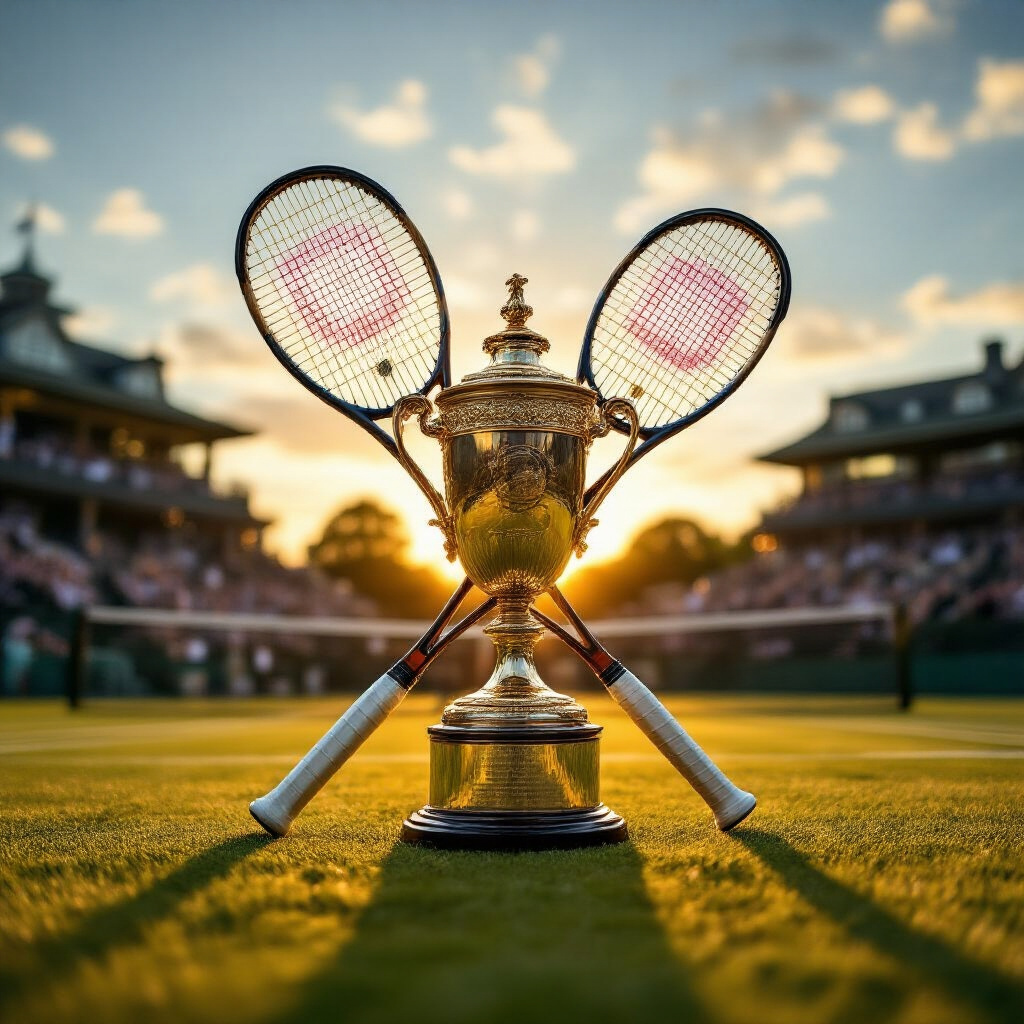
Throughout the storied history of Wimbledon, the championships have been defined by extraordinary athletes who conquered the prestigious grass courts. From the legendary men’s singles champions like Roger Federer and Novak Djokovic to dominant women’s champions such as Martina Navratilova and Serena Williams, these players have created unforgettable moments in tennis history. The memorable finals, remarkable doubles partnerships, and statistical achievements all contribute to Wimbledon’s unparalleled legacy in sports.
The impact of Wimbledon champions extends far beyond the court, influencing tennis culture, fashion, and even social change. As each new tournament approaches, fans eagerly anticipate which players will add their names to the illustrious list of Wimbledon winners. Whether you’re a dedicated tennis enthusiast or casual observer, the stories of these champions remind us why Wimbledon remains the most revered tennis tournament in the world.